Saturday, May 29, 2010

How to find God by Losing Your Car Keys

I'm sure you're wondering...

But don't expect any miracles to be revealed in this blog post. The best that I can tell you is that you might think a little deeper about your own life experience, and perhaps find a bit more meaning than you previously had. Maybe not. But either way, let's get started.

The story begins like this: This morning I met with my Thursday networking group ProMetroNet. Immediately afterward, I struck up a conversation with a very nice gentleman sitting next to me, who I found out has a similar love for bike riding. At the conclusion of our talk, we neglected to exchange contact information. but upon our departure we both said (at exactly the same time) "I hope to see you again". Remember this for later.

After Irene and I finished the Coaching Corner radio show today (Thursdays on wrcr.com at 10:07 am), I mozied on down to my car, where I planned to head back to the office to get some Rockland Web Design work done. On the way there, I realized I didn't have my car keys on me! Now I admit, I deal with a lot of details on a day to day basis, as I'm sure we all do, and I sometimes misplace things like my keys. But usually I find them pretty quickly. This time I was at a loss. They weren't inside my car, they weren't in the radio station, and nobody seemed to know where they were.

I was getting increasingly frustrated. I had several deadlines to meet today and as usual, very little time to get it all done. I had my laptop with me, so I decided to head across the street to Panera Bread, where I logged onto the Internet and started to do some work. But I was mostly distracted by the worry that I couldn't find my keys.


Shortly thereafter, I came across a news article that disillusioned me even further. Stephen Hawking, the British Theoretical Physicist who wrote the book "A Brief History of Time", is about to release a new publication that theorizes God did not have a hand in creating the universe. According to his latest findings, his theories all point to the consensus that the laws of physics by themselves were able to create the universe from nothingness. Kind of like making a chicken without an egg or a chicken..

Why would a small news factoid like this depress me? Well I don't know about you, but when I have a bad day, hearing something that challenges my fundamental beliefs on life can be emotionally jarring. I grew up in a very devout Christian household, yet I was fortunate to be blessed (and still am) with a Mom that showed me many different ways, Faiths and Religions on contemplating / relying on the existence of God. This has been a source of strength for me thoughout my life, especially during the difficult stretches.

However, I also believe in the relevance of Science. I'm no genius, but I see the correlations between facts, numbers, some causes and effects. So to reconcile the two, I sought those geniuses that factored in the existence of a Higher Power in their theories (I mean if George Lucas and Peter Jackson did, why shouldn't I?). Stephen Hawking was one of those people. To hear him suddenly flip his theories around was similar to suddenly finding out that the Earth is no longer round -- it's now gone back to flat.

As I said, this story disillusioned me. And at that moment I said a prayer that -- if 'anybody' was listening would've probably sounded more like a Police A.P.B., but a very very silent one. At that moment, the bike rider guy I met this morning walked back into the restaurant...5 hours later from when I met him. We had hoped to meet again; we did not expect this to happen so quickly. Coincidence?

The subsequent 1 hour conversation I had with this gentleman spanned many topics, such as politics, business, life, bike riding and other things. And, without going into too much detail, we also discussed something that that might mutually benefit us and others in a very good, tangible and significant way. We exchanged information this time, and plan to follow up with each other in the coming days.
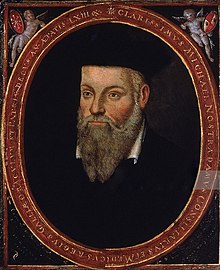

I hope you can relate to this - a chain of events that led to an effect that could never have happened in a million years, except for some strange, inexplicable set of causes that culminate in a new chain reaction result. Yes I can hear some of you right now saying "bah humbug" it's all cause and effect and absolutely nothing more...but think about it for a moment. Did you ever wonder about when two random events occur next to each other? Did you ever stop to think that there might be more to the random occurrences than just sheer coincidence? The prognosticator Nostradamus tended to associate such closely related writings, occurrences, and coincidences, using them to detect possible future outcomes. Some of his predictions have been strangely accurate, even ones related to the 9/11 terrorist attacks, the onset of world wars,um and I hope at least a few happy ones.

Before he passed away, my late Stepfather told me on his deathbed that there has to be a God, simply because there are just too many coincidences that occur in our lives. I see such occurrences so often that if I started communicating all of them to the general public, I'd probably be put away for some time (at least I'd get a break from answering emails for a while :-D) But even without such coincidence, I can do something as simple as looking at my hand, move it with my thoughts as normal, and remember what a miracle it is to be able to do so. When we were children we could stare at this miracle with such wonderment. Now as we retreat further into the logical side of our brains, we begin to take for granted that which was originally a miracle to us, including the one we spoke to before we went to sleep each evening. Whoever, or whatever created us...cannot be explained by mortal man. And quite frankly, at some point we should stop trying to do so and just accept it, the way we did when we were brand new.

Stephen Hawking is a brilliant Physicist, but today I am deeply disappointed that he has flipped his views on the role of God in the creation of the universe (BTW to be fair, I don't think he wrote that God does not exist, he simply stated that his theories do not lead him to the conclusion that God had a hand in creating the universe - the Laws of Physics did). Another lesser known scientist Fred Allen Wolfe (a.k.a. Dr. Quantum) , author of the book "Taking the Quantum Leap" once reported on a classical 1920's experiment that showed that the mere act of observation changes the outcome. If this is the case, is it possible that our attempt to seek the true nature of God could hide the Deity from our eyes?

Check it out for yourself...


I should mention that several months ago I met another gentleman at a party that prompted me to write a draft blog about the video you just saw. But I was so astounded that I couldn't put it all into writing, and saved it for future completion. Today is the day that I complete it, with a simple story that begins with losing my car keys.

I hope you see a point in all these ramblings I submit to you here today. If you don't, consider having a dialogue with other friends and family that you think may relate to this. It might open your eyes to something different that you did not notice before. My feeling is that sometimes you just gotta believe. It's as simple as that. And when you do - all sorts of things happen that open your eyes to a much different reality than is right in front of you. Yet it's up to you to take that first step. When you stop believing (which happens from time to time), that's when the universe of miracles, wonder and amazement collapse for the sake of the cold hard numbers, facts, laws and rules, the orderly and linear direct cause and effect that we've all socially accepted as the norm for our corporeal existences. But behind the scenes, there might be something, someone that can be found with a simple 'Dear God'.

The choice is yours.

Oh by the way: Later, after I left my conversation with my new friend, I found my keys. They were on top of the roof of my car.

:-D

Monday, May 24, 2010

Facebook: "Likes" will replace "Links"

It's so cute, isn't it? :-) The little button to the right of this blog...that teeny tiny little 'like' button that makes you want to say "Awww! You are so CUTE! I just wanna take you home and squeeze you and love you and kiss you and push you until you like me back!" (Flashback to Elmira from Animaniacs, Gen-Xers)

Of course I'm exaggerating, and of course your feelings for the like button are not that deep; they are more akin to Sarah Palin - nice woman but a few bricks short of a henhouse. But you gotta admit, it is kind of cute (The like button, not Sarah...focus people!). You wanna push the button. Just so that you can join the others that all say that they like something, anything that validates our collective existences, right??

There's a lot more to Facebook's little like button than meets the eye. I watched Mark Zuckerberg's presentation at Facebook's F8 convention on the new Open Social Graph, and his plans to make the web a more social and connected society can indeed come to fruition, especially since he's got help from heavy hitters in the industry such as Microsoft and others.

Now that Facebook has over 400 million users (more than the U.S. Population, at least prior to results of the 2010 census), it wields a great deal of influence over the web. Sure, Google is the place to seek information, but when you're looking for a really good movie, aren't you going to also want to ask your friends, who have actually seen that movie? Or better yet...what if you went to the Iron Man II website, and actually saw right there that your friends like that movie? Wouldn't that give you a little more rationale for going to see the movie?

Facebook's boldest web strategy yet centers around this little like button, and the implications of it are as far reaching as Google's original strategy to organize the world's information online. I must admit that this is the first time in my life that I have been both excited and worried about a new online technology. In a nutshell, the reasons are these:
  1. The button gives ordinary people with little or no knowledge of web development the ability to rank and organize the web according to its usefulness (Yay! Excited)
  2. Businesses have a new social tool that allows them to gain popularity very quickly, as well as learn more about their user's interests (Yay! Excited)
  3. However, Facebook now has a method for collecting immeasurable quantities of data on each user its social networking platform, no matter where they go online (Um, worried)
I'll explain each a little more in detail.

1. Ordinary web users can now rank and organize the web.

In the early days of Search Engines, it was recognized by web developers like us that one of the best ways to help our clients show up on Google, Yahoo etc. was to call up other businesses in their communities and ask them to place a hyperlink (www.example.com/etc) on their website to our clients. The concept, openly divulged by Google, was that the more high-quality links placed on other websites that point to a client's website, the higher it will rank with respect to its peers in the same category in its search engine.

I must tell you, it was and still is a tedious process. Calling the right people, asking them to place a link on their websites, and often walking them through the process of adding that link takes an enormous amount of time. No complaints, but there had to be a simpler way...

Enter Facebook.

Now, simply by finding and clicking the little like button on any website , you or anyone can instantly make any web page more popular, simply by clicking 'like'. In the short term, this will not do much except raise the number of people that like a given page. But over time, Facebook and partners will be collecting that data, and my hypothesis is that they will be creating a new 'social search engine' that ranks websites according to their popularity from the average user.

This also means that as a business owner, you can more easily spearhead a web campaign to get followers simply by having the like button placed on all your web pages, generating just a little online buzz, and letting it steamroll from there. If the content you are trying to get liked is of good quality, then the buzz will spread, and more and more people will be inclined to push the like button. The content will spread on its own.

But that's not all...

2. Businesses can use this data to find out what appeals to consumers.

Now fast forward a few months after putting some content out there on your website. You have 205 people that like your article on spaghetti, and 12 that like your article about wanting to do some oil-surfing in Louisiana (best example I could come up with). Using that data, you can get a clearer picture of what is wanted and needed by your target audience.

Additionally, you can get a much more accurate picture of who your audience is. If those 205 people that like your article on spaghetti happen to be people who like gourmet cooking, then you as a business owner can refine your future content to attract more of that demographic. In essence, the like button is a very powerful tool for focusing a business' marketing efforts in a more effective manner.

But, there is a price to pay...

3. Guess where all that data goes?

Here's where it gets tricky. In order to create Zuckerberg's vision of a social web, somebody's gotta retain, centralize, and crunch all that data. You can be certain it's not going to be Xerox.

I'd like to pose a hypothetical situation. Let's say your 10-year old kid goes through a phase of finding a lot of, well...controversial stuff on the Internet. And on each site he finds, he clicks on the like button, to let his online friends know that he is interested in this material.

A few websites may not hurt...but over the course of months or years, Facebook could theoretically collect this data, and offer it as marketing data to their 3rd party companies. Even at this point it may still be innocuous, but the point is that now the data has left its home base. And the fact that this information is out there for use by various companies could - in the long run - have as damaging an effect as a bad credit report. In short, it could be very harmful to click on various likes across the web without taking a moment to think about what we are placing our stamp of approval upon.

Conclusion

Facebook's vision of a Social Web is a grandiose one. However I think that it is entirely plausible. Social Tools such as the like button will give ordinary users the ability to give their votes of approval on any content that exists on the web. Within a few short years, the like button will hold as much power as a link from one website to another. It has already begun.

Businesses will be able to capitalize on these new features, beginning simply by having them installed on their websites, and finding what works best for their target audiences. If you would like assistance with adding these social tools to your websites, call Rockland Web Design at (845) 271 - 4488. Most plugins can be added within an hour's time, so it is a fairly simple and straight-forward process for most client sites.

But just as much as we advocate the usefulness of the Facebook Social Plugins, we subsequently argue that consumers will need to be educated on them as much, or possibly more than businesses. I think the greatest danger is to future generations that randomly surf websites and like, like, like, all day long. There needs to be some sort of safeguard, to protect them from being stereotyped as an advocate or purveyor of damaging, harmful or offensive information.

I for one will be researching Facebook's new social plugins, especially the like button, very intricately. I see enormous potential for these tools, especially for businesses, but as mentioned above I do believe that the general public needs to be educated on how to use them properly.

Speaking as a single man without any kids, I am looking ahead and imagining that I will need to make the time to consistently teach my future children (God willing) that they need to make intelligent choices when going online for any reason, and much like Stephen Covey's explanation in the Seven Habits of Highly Effective People, let them know that there is a space between stimulus ("wow this is a cool website!") and response ("I'm going to click on the like button") that gives them the freedom to make the right choices. And that choice can be as small as pointing a mouse toward the like button.

Saturday, March 27, 2010

New Address for Blog

Hey we've moved the blog to a new location, so it's easier for you to type it in your browser. All future posts will be at http://blog.rocklandwebdesign.com

See you there!

Why Blue Collar Contractors Really GET Web Marketing

Yesterday I had a meeting with a local contractor about creating a website for his business. The guy had plenty of questions about what is involved in building a website, which we were happy to answer for him. At the end of the meeting, we both felt confident that his new website would be one that he would be proud to promote to his business community.

During the meeting, he also reinforced something that I've realized for the last year: Contractors, Construction Professionals and generally people that work with their hands in their own business really, really understand web marketing and advertising. The reason is that they don't bog down their message with fancy, flowery, and quite frankly, BS-style language that completely hides the primary message of an advertisement, marketing piece or website. It's cut and dry, to the point and easy to relate to.

This is in stark contrast to how many in the marketing, advertising and web community build their materials. While content is certainly king on the web, the primary reason for it is that search engines need material to latch onto, in order to understand what a website is really about. If (all other things being equal such as links, etc.) you don't add the keyword 'pizza' to your website that promotes your pizza restaurant at least several times, the next pizza store owner will do it, and Google will likely find that location before yours. But sometimes it can go too far, and your visitors will come to your site and get bored with the mission statement, list of clients, about us, etc. etc. Lost in all this is that they are coming to the site to order a damn pizza! :-)

But the contractors we have been fortunate enough to work with know differently. They know that a person that comes to their website is looking for one, maybe two specific things...and it makes perfect sense to create a message that is clear and to the point, directing them to the right location, and creating a good call to action that entices people to contact them. They don't need it fancy, they need it to be direct and compelling.

Another thing I noticed is that contractors generally like to use very bold, stark, contrasting colors. Bright yellows or reds contrasted with black lettering is something they know that is going to be picked by a viewer the moment he or she encounters the message. While the imagery can change, the primary message is wrapped in these big, bold colors for all to see. While it may be simpler than a fancy flash slideshow or a image background, the point is that the visitor is captivated the moment the advertisement, graphic or web piece is viewed. Bonus: It's easy to create, and is cost effective.

I remember my Grandfather Thomas Avenia (may he rest in peace), a bicycle store owner for 60 years of his life, used to have a simple sign in front of his store - "BICYCLES". When you drove past that sign, you knew that there was a store nearby that dealt with bicycles. You might not know if he sold them or repaired them or both, but that large, bold sign told the primary message with one, single word. And it worked! it may be a bit of a stereotype, but truly I believe that people work with their hands truly have a knack for creating this compelling but easy-to-understand message, because somehow they know that they only have 2-3 seconds to get the attention of their audience, and they make it count.

As you are building your message, advertisement or web copy, remember the words of my old boss Alan Shulman from Samsondale Furniture of West Haverstraw (may he also rest in peace): "You have seven words to tell your story. If you can't do it, don't bother."

Friday, March 26, 2010

Why I love the UNDO button


So I was working on three contracts this afternoon, and I accidentally overwrote a LOT of information that I didn't notice, until about a half hour later! Luckily, MS Word saved by butt, because MS Word saves up to 100 UNDOs at a time. But for some reason in this instance I got to go back 184 UNDOs! Whatever it was...rockOn!


Saturday, December 5, 2009

Twitter: Instant Search

For those of you that are still unsure of how Twitter will help your business, take a look at http://search.twitter.com.

Looks a lot like Google, right? A simple search engine up at the top of the screen, where you type in the exact piece of information you seek. The difference is stated in their slogan "See what's happening, right now." Twitter is quickly becoming the source for real-time quick snippets of information as they unfold in everyday life.

A perfect example of this would be Tiger Wo...no I'm not gonna go that route because it's been way too overplayed. A perfect example would be to do a Twitter Search on "Kobe Bryant", which will bring up results from all us average, everyday Joes and Janes that will likely mention something about his miracle shot at the buzzer of the Lakers / Heat game on Friday night. (by the way it was absolutely amazing - check it out here). The point is that instead of waiting an hour or two (or even twenty minutes) for a news organization to post an article that Google picks up, it is now possible to search any term, and see how the general public feels about it...right now. :-)

This is an excellent parallel to Google's search engine, which favors information that has been posted for longer periods of time. In case you are thinking that Twitter is going to replace Google, it isn't. The former has already linked Friend Connect with Twitter, and that's just the beginning. My prediction is that the mass market will further embrace Twitter for their surveys of the landscape on breaking news (I hope somebody's watching tweets at the White House), while remaining loyal to Google as their main knowledge library.


To begin using Twitter's search engine, simply type in a term much like you would use Google. The same operators also work; for instance if you are looking for an exact term, put it in quotation marks like this: "Kobe Bryant". (A full list of operators can be found by clicking here)

How does this help you? Here's a quick suggestion: if you are looking for more business, try typing in a generic term that is relevant to what you do. For example - if you are a Realtor, type "looking for apartment". You'll see tons of tweets from people talking about their quest for new digs. If you localize your search using the advanced search tool, you can narrow your results by location. Quite frankly, most of the results right now are in NYC, but as this service continues to gain buzz, you'll get more results in the local area. Here are the tweet results: http://search.twitter.com/search?q=+looking+for+apartment+near:"Suffern+NY"+within:50mi.

Rockland Web Design occasionally searches for tweets based on the term "need a website". The result is a list of some possible future clients. I know I'm giving out some information that other web development companies may use, but it's ok since we're all professionals looking to help the client.

Anyway, I hope this clears up a little of the mystery surrounding Twitter. I would certainly recommend to keep a close eye on the latest innovations that this young company creates around its service. It's yet another cool technological advance that we have at our disposal. RockOn.

Tuesday, November 17, 2009

The Power of Appreciation

Recently I had a birthday. I'm not saying that to get any more well-wishes (please forward all checks to my P.O. box), rather I am reporting to you on what I noticed from the other side of the coin.

Usually I wax philosophical about how it is a really good strategy to give approbation and praise to those that you have as friends on Facebook. I call it "Social Capital". The idea is that if you congratulate, celebrate, empathize and relate with others in your network, they will do the same for you, and it will increase awareness of your business. More importantly, it makes others feel good.

But up until now I was simply guessing that such a practice makes people feel good. Then, on October 31st I opened up my Facebook to see a bunch of Happy Birthdays on my wall. I have to say, it really made me feel...well, special. And because I felt special, I wanted to personally thank each and every person for the birthday wishes. Since that day two weeks ago, I have had an even greater dialogue with each of those individuals. Some of them are business associates, some are acquaintances, and some are friends. All of them are people that I appreciate to a greater degree, simply for clicking a button or two and leaving a Happy Birthday message.

My point is that you can do the same for others. Follow the golden rule and give the same sort of appreciation that you wish to receive. Not only will it help your business, but it will make your day flow a little better as you find that people really do care.

Tom Ossa
Rockland Web Design
(845) 271 - 4488

P.S. Want to integrate all your social networks in a snap? Call Rockland Web Design! We have a simple, very low-cost solution that will save you time and effort, and help your business gain more exposure.

Friday, July 3, 2009

Example of Great Customer Service

I just took a quick lunch break, and went deeper into a favorite book of mine, Zag, by Marty Neumeier. I won't bore you with the details, but it is a book about helping companies to establish a brand for themselves that are unique, and needed in the marketplace.

A great example is on pages 77 -78. A Middle Eastern couple has a coffee shop that they run every day except for Christmas. (Geez and I thought I worked hard) They worked night and day to make sure that their customers were well taken care of; they gradually developed a loyal clientele by giving out loyalty cards, as well as anticipating what their customers needed before they even walked through the front door. For instance, if they saw a customer's car that they were familiar with, the customer's favorite drink would be created before he or she even walked through the door. Customers would get to know each other, and the place turned into a popular coffee bar.

Then September 11th hit.

Ironically, a Starbucks opened up on September 12 right across the street. You'd figure that "9/11", "Starbucks" and "Middle Eastern" converged to put an end to their customer base...but it wasn't so. As a matter of fact, there was a line around the street corner of people who were showing their support for the nice Middle Eastern family, who put their hard work into making their customers feel special.

It just goes to show how important it is for all of us to work hard to take care of the people we serve.

Ok, back to work. :-)

Tom Ossa
Rockland Web Design
(845) 271 - 4488

Tuesday, June 30, 2009

Why We Are Still Lucky - Freedom.

In the past few months, I've floundered in trying to come up with a suitable blog to close out the three part series "The Good, the Bad and the Lucky". First we talked about all the cool things that will begin to occur in 2009. Then we talked about the controversial changes that we will need to endure. Quite frankly, every time I re-read those blogs, I still could not come up with enough convincing reasons that would cause all of us - including myself - to believe once again that the good outweighs the bad, and we are still fortunate as ever to live in this great Country. I mean, with all the terrible happenings in the world, the difficulties we face on a daily basis, as well as the general negativity of our environments at this integral moment in time, how can we consider ourselves lucky?


I'd like to tell you a story.

A man named J____ was very prosperous in life. J had all the wealth one could possibly desire, as well as a beautiful wife, many sons and daughters, and a rich collection of family and friends with whom he could share his hopes and dreams. The man was also a very successful businessperson, and was well known for the quality of his products and services.

One day, two very powerful associates of J who held sway and influence in much of his life, had a private conversation, and debated who was more favored by this man. They then plotted to destroy his empire, and find out which one of them he ultimately sought for help. One of them volunteered to do the dirty work, the other just kind of kicked back and observed - hoping that J would be able to survive the treachery. First, the "bad dude" (yeah I know...you like my metaphors) set out to destroy his reputation as a good businessperson. Next he spread rumors that he was an unfaithful husband. When those tactics did not work, he finally resorted to assasination of family and friends. In the end, J had nothing left. His business went bankrupt, his wife left him, and his family and friends were gone. He was ruined.

That's when the bad dude started visiting, and tried to convince J to rely on him to help re-build his empire. He tried everything...documentation, spreadsheets, PowerPoint presentations, threats, bribery and extortion, to make this man see that the very powerful indivdual that stood before him ultimately held the keys to his rebound in life.

In the end, it all backfired. J wouldn't listen to the bad dude's reasoning, and threw the man out of his shack. He then chose to seek out the dude that stayed away from involvement in the destruction of his empire, and was secretly rooting for him all throughout his trials and tribulations.

The gentleman altruistically helped J get back on his feet. He lobbied the press to reinstate J's good will with business associates, introduced him to new potential family members and friends. He remarried - this time to a woman that completely trusted him and believed in him. He developed new and stronger relationships with friends. He started a family again. Over time, reestablished his kingdom, which was now stronger than ever.

One day some years later, the Good Dude came to see J. As they reminisced about the good and bad times, J recalled that his friend did not appear during his toughest moments in life. When asked why he did not come to help during his trials, the dude said "I was always available to help you...but you needed to come to me of your own free will."

The story above is actually Biblical in nature. It is the story of Job (with some Footprints in the Sand thrown in for good measure), which in my personal opinion is the mid-point between the Old and New Testaments. Much like World War II vets often say when you speak to them about post-war America, I believe "Something changed after that point".

I don't claim to be a prognosticator, nor do I have any answers to life's complex questions. But I do know that the story above is likely something that we can all relate to at some point in our lives. Whether we are businesspersons, politicians, family people, or even just trying to keep our heads above water, we have all gone through tough times. I think it's safe to say we're all in such a time right now. On a National level, we can look through the last 200 years of our History and say that we have seen many integral moments come and go (American Revolution, Civil War, Great Depression, World Wars, Civil Rights Movement), each with the conclusion of a hopefully better future.

If you look at the litany of positives and negatives that I listed in my blog during this three part series, you'll see at least a few things to latch onto - perhaps creating a greener society for our children's children, or to figure out ways to protect our National integrity without damaging that of others, or to protect the innocent from harm.

The bottom line is this: The reason why we are still lucky is that we still have the freedom to align ourselves with those who want to make the world a better place. Much like Job did, he could see through all of the trickery, deceit and malice; he chose to seek out one who would genuinely help to rebuild his life, and empower him to continue to do good deeds during his existence. We need to be constantly on guard to ensure that we continually seek out such good people, genuinely inspired to help.

Who knows what the world will be like in 20 years? Will a Utopian, interconnected society with less poverty crime and war emerge? Or will it be a post-apocolyptic war zone? Scary stuff...the most troubling part of this is that we might not have a say-so in the outcome. But we do what we can; we still have the freedom to choose what is right for ourselves, our family and friends, our city, our country and even our international friends...we can make that small difference. But we have to care enough to work toward making that difference. The moment you give up on making such a difference is the moment that you'll be visited by that one dude who promises you the world, and ultimately has nothing to show for it.

And during those moments of indecision, remember that if you actively seek out good friends, family and associates...like-minded individuals who can aid you in your journey to creating that Utopian society we all seek, well then you're still ahead of the game.

Voltaire said it quite well in his book Candide: We must tend to our gardens. In other words, don't worry so much about what's going on out there in the world; concern yourself with the things that you have the ability to change.

I don't really know how to end this blog except to encourage you to never stop trying to make the world a better place, not just for yourself, but for others. If you do that, I can assure you that your are truly a lucky person. :-)

Monday, March 30, 2009

The Bad News About 2009 (Part II of III)

In my last blog I began a three-part series entitled "The Good, the Bad, and the Lucky". In part I, I listed a few ways that we can be hopeful about 2009, including reasons such as innovation, volunteerism and environmentally sounder decision-making.

Since that blog, I've been labeled a traitor, a tree-hugging liberal, and several other derogatories that cannot be listed here, kids. However, I think this blog that I write now will balance things out...hopefully so that we can have a completely clear view of what to expect in the future, good and bad. I encourage you to send hate mail/comments if you disagree. No expletives, please.

Now - the bad news. Read on to learn about the downside of 2009.

The Bad: Part II of II

It's been over 2 months since a new administration has taken hold. Are we surprised that the world has not yet become a Utopian paradise as promised during the campaign? 

Luckily, according to the latest Gallup Polls, Americans for the most part understand that our economic and cultural shifts will take time to implement. 60% of those polled still have a favorable view of this administration, and most of those do understand that the nation's current economic woes are not a direct result of the decisions made during the past 2 months...yet.

There are more downsides to 2009, not just economic. At the risk of inducing you to swig a few more shots of Pepto-Bismol, I encourage you to read through the following blog to understand that beyond our personal money and survival concerns, there are some other things to which we should devote our vigilance.
  1. Economic seismic shifts - As we've already seen, the President has taken on the Financial Sector and the Auto Industry. In each case,  massive downsizing and reorganizations have been put into play, in exchange for taxpayer funding in the billions. The most recent casualty is Richard Wagoner, CEO of GM (forced out of office in part by the Obama Administration). But the real ripple effect will occur within the UAW, the collective bargaining union that is responsible for the auto workers of American Auto manufacturers.

    A little history lesson: according to Joseph B. White of the Wall Street Journal, the UAW's relationship with GM has prevented the car manufacturer from downsizing its operations for over 20 years. When Honda began making automobiles in the United States in 1982, their workers were primarily non-union, which led to a leaner, meaner organization on our shores. GM, in contrast, continued to capitulate to the wishes of the UAW, and subsequently has spent over $103 billion in health care and pensions alone for the past 15 years. Further, another $20 billion will be needed by GM to fund these plans beginning in 2010. Where will the money come from?...

    The net result is going to be the same in every industry bailout - bloated, oversized organizations will partly or fully become the property of the United States Government, while it eliminates jobs, increases unemployment, and thusly puts pressure on other industries to remain solvent, primarily by driving prices up to compensate for lost revenues. Taxes will also rise - a lot. On this note I definitely do not claim to be an expert, but speak to any fiscal conservative and you will hear a resoundingly similar theme emerge.

    According to latest analysis by Fed Chairman Ben Bernanke, this pattern will continue to occur for several quarters, potentially ending at the close of 2009.

  2. Moral and Ethical Debates - The stage is set for several very contentious issues to come to the forefront of American Politics, again. Regardless of what side of the coin you fall on, your notions of right and wrong will be challenged. I do not write to change your mind one way or the other on these issues, however I will list a few to remind you of your need to be aware and potentially active in the ongoing national debate:

    (Each topic is linked to pages on Wikipedia.org, which explains more about the subject matter. Nothing graphic or obscene is linked, whatsoever)

    - Partial birth abortion (pregnancy termination in 8th and 9th month)
    - Euthanasia of terminally ill or advanced age individuals
    - Stem Cell research from human embryos
    - Freedom to worship in a manner chosen by the individual
    - Same sex marriages and adoption by same sex couples
    - Capital punishment / death penalty
    - Torture of detainees by US Government agencies

    At the core of these issues, I believe the questions to ask are these:
    - "Who is the individual?"  
    - "What rights are afforded to the individual?",
    - "Should these  rights of the individual be sacrificed for the good of the nation / world?"

    Deep questions. Good luck.

  3. National Integrity - A very sensitive topic during the 2008 elections had to do with as the famous / infamous Michael Savage describes; Borders, Language, Culture. As my Uncle and I argue about nonstop, there is a line that needs to be protected in order to maintain the cohesiveness of the United States. It is evident in our National policies toward immigration / national defense, our education curriculum, and our embrace of world ethnicity. But where that line should be varies, depending upon who you talk with.

    Reverting back to history for a moment, The Roman Empire formally ended in 476 AD, after centuries of political debate, in-fighting with steadily approaching Germanic tribes, and a military establishment that grew too vast, not being able to change with the times (kind of like GM with swords and horses). Thereafter, until 1453, the Roman floundered as a second rate collection of nations, attempting to regain its former glory and maintain its political influence. 

    In a way, we can think of the United States as a modern day Roman Empire, what with all its years of expansion and contraction. The policies of presidents and administrations since the 1950's (when outgoing President Eisenhower warned of the expanding industro-military complex) have brought America to one side of the coin or the other - bend to the will of various nations of the world, or muscle other nations into agreeing with our policies.

    It will be very interesting to see if the current Presidential Administration parallels the history of the Roman empire over the next few years. Hadrian's Wall might have already been built (think technology, folks). But has Diocletian emerged to lead our country, or perhaps another infamous emperor?
Conclusion

Obviously, In several parts of this blog, I've been free-flowing to get some ideas out there that might cause you in web-land to ponder our collective futures. The bottom line is that we don't know what is in store for the United States during the rest of 2009. Much of it is likely going to be stressful, and test ourselves and our businesses more than ever before. While I want to keep this blog on a cautious note - I will say that I am still optimistic about the Nation...and the World's future in the short and long term. In my next blog, I will discuss why we are "lucky".

Tom Ossa
Rockland Web Design
(845) 271 - 4488

Saturday, January 24, 2009

The Good News about 2009 (Part I of III)


Now that everyone has come down off their contact high with the groundbreaking election (dare I say a well deserved victory), we can all start doing our work to figure out what the heck we civilians should be doing to help turn things around. If you've been following this blog for the last few months, I've been posting advice on how to get everything done more efficiently in the world of web, tech, computers and sometimes your interpersonal relationships (hint: if you try to put  your wife in Hibernate mode, it's time to take a step back from work).
Anywho, in my stream of consiousness way, I'd like to begin a three part series: The Good, the Bad, and the Lucky. Now I know all of you out there in Internet world want to get rolling right away with the lucky...but if you've earned your bones in business you know luck is something that is earned - not freely given. BTW Click here for an article from About.com about the scientific background of luck. So I encourage you to thouroughly read through the first two parts of the series, and then roll with the third. Think of it as your trip through Heaven & Hell on the way to the Truth of things.

So, let's begin...

The Good: Part I of III

Most of us saw history in the making two weeks ago. The election of President Barack Obama has given a decent number of Americans - and members of the International Community - that small slice of Hope that things are gonna get better in the coming years. Of course for some in Middle America, the concept of having a President in office that doesn't think that Jay-Z is a well marketed sneaker manufacturer might be new to some, but I imagine that over time, the culture shock of that revelation will sink in, and we will all live in better harmony with one another.

Beyond this, there are some really, really cool things that the President brings to office. I will cite three in this blog.

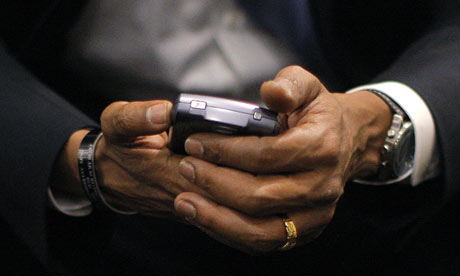
For a primer on the first item, please quickly check out this article: Obama's personal win: keeping the BlackBerry - Yahoo! News.

Special thanks to Linda O'Donnell from Home Instead Senior Care for providing this article. 

Awesome thing #1: Yes folks that is correct - Mr. President will be bringing the concept of technology back into the Oval Office. It will start with the Blackberry that he often checks to keep in touch with friends and family (no, he's not TMing Abdimihniminiajed just yet), but if he sticks to his intent, we may just have the first President in history to have a laptop on his desk. 

Seemingly innocuous as it sounds, that is a wonderful cultural shift for Americans in general. As noted in the inaugural speech, the President cited our responsibility to help to return our Nation back to a place that we can all be proud of once again. Part of that challenge to us involves embracing ideas and initiatives that can help us to overcome the latest supposedly insurmountable odds that have been stacked against us. To accomplish this, I feel that embracing technology as a whole will play an integral part of the picture moving forward. More people will get on board - and not just soccer Moms checking up on their kid's activities on Facebook (a good thing).
Just think about the devices you use on a daily basis. From GPS systems to mobile phones to your computer loaded up with Microsoft Office (probably 2003...but you just gotta try 2007 - it rocks), most of us already have all the tools we need to more intricately track the projects, prospects and profit that flows through our hands on a daily basis. And when the financial industry recovers from its severely flawed processes of indulgence, the phoenix rising from the ashes will be - as my good friend Sven from Valley Cabinets says - "leaner and meaner". 

Additionally, new technologically savvy tracking methods, compliance and regulatory practices will be locked in, preventing the most affluent and wealthy of our society from taking more than their share...well, for the most part. I mean there will always be a few people who benefit from bucking the system and causing great harm, but in the words of Mahatma Gandhi, "When I despair, I remember that all through history, the way of truth and love has always won. There have been tyrants and murderers, and for a time they seem invincible, but in the end, they always fall. Think of it, always."

From an Intenet-based perspective, the picture is even brighter. Just looking at some of the current trends, we can already see a difference:
  • One survey cited 49% of retail respondents updating their web presence, either through design, development or search engine optimization
  • 76% of those expect higher sales as a result of their initiative
  • In December of 2008, Facebook added 222 million new unique visitors, and has grown 10% each month since September of '08. It is gearing itself up as a marketing platform for a new generation of people - not just to throw a fake snowball at your friends list (ugh), but to let your crew know what you and your business are really all about. (Source: Advertising Age - February 2, 2009)
  • New kid trends on the block will continue to grow, such as cloud computing - which allows many to start businesses and use only the small amount of resources they need in order to get things done. a good example is Salesforce.com, which charges a monthly rate for Customer Relationship Management tools for the mobile workforce. This translates to a more measured way of doing business - akin to the concept of pay as you go mobile phones, which will open the doors of commerce to a new startup generation.
Positive shift #2 is that sharing and giving are back en vogue. For those of you who sympathize with Bernie Madoff, let me explain in very simple terms: The 2/3 of the world that don't have the advantages that the rest of us are blessed with NEED OUR HELP. And through the advent of new government-inspired programs, as well as truly good-hearted people such as Sensei Mike Malandra, those who suffer will not be forgotten.

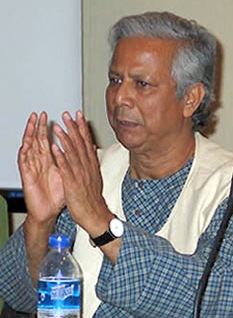
Believe it or not, great rewards can be garnered from the simple child-like Faith to give. Take for example Mohammed Yunus, founder of Grameen Bank in Bangladesh. He took the concept of Microcredit and applied it to the financial industry, offering very small loans to humble impoverished souls who could not offer any collateral. Astoundingly, the loans were paid back, and Grameen continues to grow today. In 2006, Mr. Yunus received the Nobel Peace Prize for his efforts. Click here to learn more about Grameen Bank.
Even if you're sitting at home in your PJ's thinking "yeah whatever", let me put this out there for thought - I admittedly haven't had that much time on my hands this past year, working to organize Rockland Web Design into a business that can provide attractive, affordable and measurable website results (that's my 5 second commercial). However, one day after our radio show last year I was blessed with the presence of a woman who has struggled throughout her entire life. All she has wanted to do is make a difference...simple as that. And through our now weekly conversations, we're finding ways to keep that dream alive, even when it seems all hope is lost. (If you're reading this, ---------, I'll do my best to help you with the Anti-smoking initiative. ) My point is that you don't have to donate your entire life; just reserve some time each week to give back. Simple as that.

Cool thing #3 is that the world just got a little greener. :-) Over 50 billion dollars of the economic stimulus plan is reserved for energy efficiency projects, such as a smart electric grid, loan guarantees for renewable energy and more. This is a huge incentive for companies older than the first Christmas fruitcake to finally get on board, retool their manufacturing / production processes, and finally keep tabs on the environment.

One of my biggest pet peeves is paper. Way back when I used to work at Next Steps as a technology instructor, and I kept on pushing the staff to go completely digital. And while I do admit that paper has its purpose (recreational reading and quilted wiping), I still can't reconcile the unbelievable amount of paper waste that exists in this area even in light of our efforts toward recycling. So, I found a great tool that may help Rockland Web Design as we return from our networking and on-site Internet service efforts...the NeatDesk! It is a high speed scanning system that allows one to empty their pockets and desks of receipts, contracts and invoices, popping them into an Automatic Document Feeder and digitizing everything. When I saw it in action, I nearly cried.


Pardon the fuzziness, I needed to reduce the size of the embed coding.

Back to the point, a hopefully real green initiative means several things:
  • A new industry and opportunity for businesses to in which to grow,  innovate, profit
  • A source of employment for Americans searching for the next growth sector
  • Less waste and more reusable materials to get our work done
  • Perhaps, just perhaps...the existence of a breathable Earth in 2050
  • and very, very cool cars - check out the Aptera, currently being tested in Cali
Conclusion

For those of you that are looking for more hard numbers to justify all the Faith and Hope that I've spouted out in this article, all I've got is links to lots and lots of resources which may satisfy the naysaying for now (Peter Griffin: "And for all you naysayers, I have one thing to say to you...Cmon...cmon!".) If you read the next blog: "The Bad, Part II of III", you'll probably relish its content much much more. But for those of you that still have a little spark left in you, those that wonder if tomorrow can actually produce believable, significant meaning in our and others' lives, for those who are ready to RockOn...I salute you. This is your time. Let's get to it.

See you next week. Bring your notebook.

Tom Ossa
Web Strategist
Rockland Web Design
Stony Point, NY
(845) 271 - 4488

Saturday, January 10, 2009

How to Be More Automatic

A few days ago, I patted myself on the back.

As 2009 rolled in, I realized that Rockland Web Design needed to change all of its forms, web-based materials and other important files with some updated company information. I was not relishing the idea of doing this; the vision of sitting at the desk until 2:30 am flashed through my mind a few times. Something like that should only be reserved for when you're hiding from the wrath of your significant other...wocka wocka.

So finally I convinced myself to start the project, and believe it or not - it took only a quarter of the time that I expected. Yay! The reason why is because I listened to some very important advice from my programmer friend Matt Galemmo of Deluge Interactive: "Always think automation." So, at the beginning of last year, I started 

As most of us go through our workdays, there are 50,000 urgent little  things that - at first glance - seem to look like the coming of the AntiChrist unless attended to within 14 seconds of first knowledge of them. And while you'll hear a few different theories on how to handle them, the truth is that they don't just magically go away - even after you take care of the most important, long-term tasks that will help your company grow, you will still need to go back to your "priority 3" tasks and start mopping up the mess.

So below are 5 techie suggestions to help you automate your daily tasks, and help you to deal with them in a more timely fashion:
  1. "Think automation" in everything you do: Matt was right - if you start thinking about your urgent tasks in terms of how things could be sped up when encountered, you start considering very, very cool solutions for making your life easier. 

  2. Detect patterns: If you see or hear something once, no big deal. If you start hearing the same problem occurring over and over again, you have a real opportunity to make the situation easier to deal with, if you stop and consider the root cause. But first you need to detect the recurring situation, such as too many emails to answer, difficulty in generating contracts, filling out forms.

  3. Take time to discover a solution to the problem: Face it, you are probably not laying out the technical schematic of a solution oriented module that will alleviate the designated core challenge. So the hell with it...just sit down at your computer and create something that will actually work, and keep tinkering with it until it is as close to perfect as possible. Just don't get too O.C.D. about it...as Irene Gutmann from Eagle Life Coaching reminded me recently, "we are not God, and sometimes good enough is good enough."

  4. Create templates: For instance, if your forms need to be updated every year, perhaps you should be creating templates or re-usable documents that allow you to change the information once or twice in a few locations, and once saved, automatically changes all your other documents. Sweeeeet!

  5. Deploy your new system: I just wanted to write the word "deploy". But what I really mean is to take your new system out for a spin. If it doesn't make your life easier, go back to steps 3 and 4 and work on it again. If it does, start plopping information into it. One thing I am planning for the office for the New Year is to use a paper-scanning system called NeatCo, which allows you to literally walk in the office, drop 35 or so paper items into a mega-scanner tool, and it all shows up on your PC. No more clutter on the desk, and once it gets in the computer each item can be quickly filed to the place where it belongs. rockOn!
Make sense? Good. Now try it out this week. Here's a few examples of places in your business life that you can start with the 5 steps:
  • Sales leads - Every time the phone rings, a new email comes in, or you return from a network meeting, do you have a place to put your stuff that you can easily access? If when a contact calls you and it takes you more than 15 seconds to find their information, the answer is no. Consider either creating an Excel Spreadsheet with all your lead information, or perhaps employ a web-based system such as Salesforce to enter information. If you need something a bit more customized for your company, Rockland Web Design can build a good web based system for you, which can be accessed from anywhere.

  • Financials - hopefully your company is doing this already, but I strongly recommend that you use an accounting software or web application such as Quickbooks to maintain every penny your company spends. And if you are inexperienced in using it, get an expert to help set it up. I used Karen Caccavo from Personal Money Manager. If you live in Rockland, Bergen, or Westchester County, give her a call.

  • Contracts - When a new sale is created, do you take a long time to write up your contracts from scratch? On Word Documents, there is a little-known function called "MacroButton". It helps you to add quick information to a contract in key locations, leaving the rest to be typed once and done. Learn more about MacroButton by clicking here.

  • Website - I don't need to toot our own horn here, so I won't. If you don't use Rockland Web Design currently, that is ok. But keep your mind open to suggestions from your web person to make many of your daily tasks as automatic as possible. A recent client of ours is very happy that we thought through some daily tasks of theirs with an eye on the long-term, so now they can log in and add their stuff quickly and easily.
There are plenty of other examples. Feel free to post your stories about how you automated your world. 

Also, a great resource for thinking ahead Steven Covey's book "The Seven Habits of Highly Effective People". The book changed my life about 10 years ago. I hope it will, or has done the same for you.

And finally, I'd like to say this; if you are frustrated, if you are saying "Oh my God I just can't take this anymore!"...it's ok. The only way we grow as businesspersons...and as human beings, is to go through the trials and tribulations of continuing to work to get it right. As Irene had mentioned, "good enough is good enough". So if you don't get it the first few times, keep trying to adjust. Just don't make the mistake of giving up on adjustments. If you do, I can recommend a really good Chiropractor to do it for you.

Tom Ossa
Rockland Web Design
(845) 271 - 4488

Sunday, January 4, 2009

The Dark Side of Social Networking - Viruses

No...I'm not talking about the viruses you can catch when you Socially Network in person.

If you're reading this, you're probably a web-savvy person. But even those that have a higher level of tech knowledge are getting hit by a seemingly innocuous threat...one which could spell great trouble if not avoided.

Several days ago, a very good friend of mine posted an item on my wall stating that she posted my profile pix on "Floatfaint-com". (You'll notice that I wrote a dash instead of a dot - that's because if it were a dot, it might show up as a link, and Facebook might detect it and try to remove the posting...also I don't want you to go there accidentally, because I care, dammit) Anyway, of course I wanted to check it out because I was curious. But once I got there, I was asked for my user name and password; a BIG NO-NO.

After checking around, I found a lot of my friends had the same problem. After doing some research I found out that there is a new wave of attacks by morally destitute hackers - this one was not as harmful as most, but is used to trick a person into submitting their email address and other information, presumably for the purpose of spamming. A blogger from the reputable security company Trend Micro found that the spammer owns several hundred domains, and is known to have links to cybercriminals. 

There are other dangerous attacks that are occurring...one of them in recent months is named the Koobface Virus, which hacks into a profile to gather personal information, and potentially turn a victim's computer into a Zombie attacking computer, takes your cc info, etc. etc.

I quickly informed my friend of the situation. She was smart to quickly change her password, and also notify all of her friends that any such posts are NOT from her.  Great job!

Here are five ways you can prevent a Social Networking Attack:

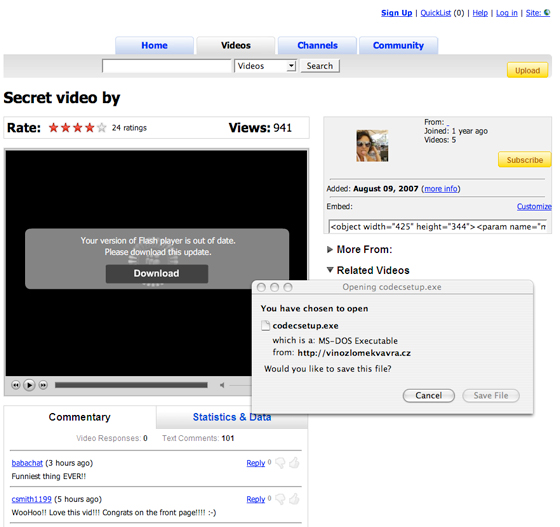
  1. Check the source - a new website, idea or fun application is not necessarily bad. But in line with Bill Gates' motto "Trust But Verify", make sure you find out where this thing comes from. If someone recommended a site to you, check with that person before installing anything or visiting the site. If you receive an email, look at the email address very closely to ensure it is from a reputable source. And before you install anything with a .exe extension, double and triple check the source!

  2. Protect your password like George Costanza - You remember that episode where he wouldn't give the password "Bosco" out to anyone...even his fiancee or a guy stuck in a burning ATM booth? That might be a bit extreme, but if your password or profile information is requested, be vewwwy vewwwy careful.

  3. Don't install tons of third party applications - Let's face(book) it, we allow a lot of apps to access our personal info. But how many of them do we actually use? I do use a few like Superpoke, Test Your IQ and What Superhero are you (I was Professor Xavier), but we don't have enough time to use all of them. Therefore I suggest that you keep your apps down to...um let's say 10. And make sure others have used them so you know they are safe

  4. Help your friends protect themselves - If you see something suspect on someone else's profile, let them know. If they don't respond right away you might want to even consider writing on their wall to ignore particular messages that may have been posted as a result of a hack. I did this when my friend did not respond right away, and I think she appreciated it. (If you don't hear from me in a week, it means she did not appreciate it, and she used a baseball bat to state her case).

  5. This one is pretty Captain Obvious, but make sure you have good anti-virus and anti-spyware protection. I recommend AVG or Norton for Antivirus, and Spybot as an AntiSpy. Also check out Comodo - a free firewall that I've used for the last year. It is a paranoid little program, but my PC has been safe thus far.
Some additional resources regarding the latest Facebook Information:
Hey everyone...Happy New Year. I know some of you out there are worried about the economy and the state of the world, but remember that success isn't just measured in dollars and cents. Care for your fellow human beings, and the rest will take care of itself. God Bless all of you in 2009 and beyond. "rockOn!"

Sincerely,

Tom Ossa
Rockland Web Design
(845) 271 - 4488

Sunday, December 28, 2008

Don't be a DWIM (Drive While Instant Messaging)

This is a short post, but I got the inspiration to do so as I was driving a few days ago. So I pulled my car over to the side of the road and sent this post to my Blog at Rockland Web Design. You'll notice that I said that I pulled my car over. And that is what I'd like to discuss with you today - how to stop Driving While Instant Messaging, or as I like to call it, "DWIM".

It's the biggest temptation since the advent of cellphones - DWIMming. I'm not sure if that's the way we should refer to the practice, but it seems to have a ring to it...just like the Simpson's foray into Webster's dictionary with the word 'meh'. I can envision a day when teens will be telling their friends "dude - you are such a DWIM." I mean, who wants
to be called that? It's almost like 'dweeb' but with an actual negative connotation to it that is rooted in reality. 

Um, maybe I'm going a little overboard. But I digress...  

I myself am a recovering DWIM, and I am quite ecstatic that our local government in Rockland County, NY is about to enact a law that bans the practice of driving while instant messaging.  Don't ask how this law will be enforced; I haven't the faintest idea. Maybe your local neighborhood officer will now ask you to whip out your mobile device, physically inspect it, and determine what time you sent your last text message, to whom, and how frequently you responded. By the way, the correct response to that request is - "Officer, you are not my girlfriend". Not that I have any experience with that situation. None at all.

According to a recent survey by FindLaw.com observed that 47% of drivers 18-24 years old, and 27% of those from 25-34 have sent a text message, instant message or email while driving. So far, four states - New Jersey, Washington, Alaska and Minnesota - have enacted laws banning the practice.

I'd like you all to make the New Years commitment to stop the madness of Driving While Instant Messaging. Thusly, I've devised a simple 12-step program to help you to stop DWIMming. It is fashioned after the classical AA program --- after I wrote the above post from the side of the road, I finished it by going home and checking out Wikipedia's page on the 12-step program. From it, I believe we now have an anti-DWIM version of this well-known program. (Note: the original 12 steps are posted below in their original form to protect their creative integrity.)

So here it is - The 12 Step Program to Stop Being a DWIM:
  • Admit that you have a very, very bad habit of Driving while Instant Messaging ("Hello, my name is Tom...and I am a DWIM.")
  • Recognize that you do not have control over your mobile device anymore - it now has control over you
  • Give yourself over to a higher power and let go, man! (um, or woman)
  • Realize that people may actually wait more than 14 seconds for their message response from you
  • Be conscious of your tendency to reach for your mobile phone while driving
  • Notice any triggering thoughts, feelings or other stimuli that cause you to want to DWIM
  • Track your DWIMs...write down the daily, weekly and monthly running total somewhere (NOT while driving!) Focus on reducing your DWIMs each day, until you get to zero. Hopefully that will happen by later tonight...
  • Check your phone once before you put the car into drive, and once upon arriving at your destination
  • If you check at a traffic light while stopped, that is a grey zone, but realize you may be honked at by annoyed drivers and irritated skateboarders trying to cross the road
  • Turn off beeping/vibrating sounds your phone makes when you receive a message
  • If you must send a message, pull over to the side of the road and do it there. This is safer
  • Encourage other potential DWIMmers to also follow these steps, and make fun of them if they don't.
If all that is too much for you, try this: while you are driving this week, if you get the urge to whip out your phone and stare at the screen in the midst of oncoming traffic, remember this simple phrase: 

"I will not be a DWIM".  

Say it with me now:  

"I will not be a DWIM". 
"I will not be a DWIM".  

And remember to post your DWIM experiences on our Facebook "Don't be a DWIM" group --- so others learn from our experiences, and make the commitment to stop DWIMming. Look for me on FB, or simply do a search for "Don't be a DWIM - Driving While Instant Messaging is BAD."

Safe driving!

Tom Ossa 
Rockland Web Design 
Stony Point, NY
(845) 271 - 4488

P.S. Contrary to pop culture criticism, AA has helped countless people turn their lives around. Aside from the slightly humorous tone above, I thought it to be a good idea to post the original AA 12 steps program:

  • We admit we are powerless over our mobile devices—that our lives are becoming unmanageable.
  • We believe that a Power greater than ourselves can restore us to sanity.
  • Made a decision to turn our will and our lives over to the care of God as we understand Him.
  • Made a searching and fearless moral inventory of ourselves.
  • Admitted to God, to ourselves, and to another human being the exact nature of our wrongs.
  • Were entirely ready to have God remove all these defects of character.
  • Humbly asked Him to remove our shortcomings.
  • Made a list of all persons we had harmed, and became willing to make amends to them all.
  • Made direct amends to such people wherever possible, except when to do so would injure them or others.
  • Continued to take personal inventory and when we were wrong promptly admitted it.
  • Sought through prayer and meditation to improve our conscious contact with God as we understood Him, praying only for knowledge of His Will for us and the power to carry that out.
  • Having had a spiritual awakening as the result of these steps, we tried to carry this message to alcoholics, and to practice these principles in all our affairs.

Monday, December 15, 2008

The Changing Landscape of Business


I agree, ladies and gentlemen - it is lovely chart. Yet if you look at the fine print at the bottom of the graphic above, you'll notice that the numbers are fake. I wanted to point that out to you before we start so we collectively agree this is an overly optimistic chart. 

But what about the charts that we've been reading over the past three months? It probably looks something like this:


As usual, the truth exists somewhere in the middle. Let's begin...

Over the past two months, we have been inundated with every possible scenario involving the recent crash of the financial industry, and the subsequent ripple effects that have affected businesses worldwide as a result. Just last night I was speaking with a very wise gentleman - a retired attorney - who predicts that 2009 is going to be a very difficult year for most of us.

As we absorb more gloom and doom, as well as hope and optimism, we start to gather a clearer picture of what will really occur in the coming year, and how these occurrences will change the landscape of business. I think you would agree with me when I say that this knowledge will be vital in helping us to not only survive, but thrive in the economic downturn.

Below are five predictions that we have regarding the changing landscape of business, from the perspective of a bunch of web geeks. We hope that this will help you to set your sails properly during the coming storm (I would say the "perfect storm"; but if you recall, George Clooney didn't fare too well during that whole thing...and we'd like you to make it to the other side of the shore).

  1. The death of the corporate website - When I read this a few weeks ago, I started panicking and worrying that Rockland Web Design should start offering coffee and sandwiches as a side business. But the good news is that websites with social interactivity will thrive in the next 3 to 5 years. This means that you will hear less of "We pride ourselves in our outstanding customer service, and commitment to quality", and more objective reviews.
    - Reviews of products and services by consumers (Increasing customer service by company)
    - Testimonials from satisfied and unsatisfied clients (increasing company focus on quality)
    - Collaboration: clients will be encouraged to interact on websites, thereby making them more involved with the parent company and subtly encouraging their brand

    So I'm not worried anymore. 

  2. Networking: online and offline - At our last ProMetroNet event, we saw people networking that we hadn't seen in months, even years. The sudden seismic shift of the economic landscape has certainly lit a fire under the pants of business persons looking to find more business. Online, popular Social Networking sites like LinkedIn and Facebook added new features that allow a more effective and efficient online experience. My new favorite is the PowerPoint tool, which allows your company to upload presentations to your LinkedIn profile using Google Documents (call me and I'll explain). My buddy Chris Keller from Liberty Tax was very jazzed when he saw this, and plans to upload a plethora of materials. So...are you doing any Social Networking these days? :-)

  3. The (further) rise of the mobile workforce - Having a cool laptop and an iPhone 3G is just the beginning. Imagine a world where your workforce is spread out over thousands of miles, and any one of your (trusted) employees can log into a central location and access data to get their work done, as well as use the programs that help them to work. Impossible? Not any more. Buzzwords such as web video conferencing, data centers, cloud computing and unified communications will translate into a new work experience like we have never experienced before. It will also change the landscape of offices and production facilities, as there will be less need for office workers to make the two-hour commute each day to New York City; rather, they can put little Johnny on the school bus, go for a jog, have breakfast and log into the company's intranet at 8:30 am. It also means that this new workforce will need to be more disciplined than ever to get their tasks done each day. This means NOT spending more than the necessary time allotted for Facebook and LinkedIN. 

  4. Security - For you IT people that are worried about where your company's data is going (did little Johnny accidentally bring the company financials to show and tell?), new security protocols will help to ensure sensitive information and programs are kept on lock down, unless properly "checked out" by an authorized user. This also means that the network will need to beef up external threat monitoring procedures - your Norton Antivirus program probably won't be cutting it anymore.

  5. Advertising changes - OK...now for the big one. We've been tracking the demise of the yellow pages for several years now. And while we won't see the print advertisement go away anytime soon, we will notice that companies such as ourselves to turn toward online advertising in droves. The reason can be summarized in two words: measurable results. Statistics software already allows company to track very detailed information such as user visits, most popular content on a website, keywords used to find a website, even the location of each visitor (not down to what part of the house they are checking you out from...that's too much - only narrowed down to city and state.

    In a nutshell, businesses will be able to track their more popular products and services, and refine their marketing strategy based on the wealth of data - all for significantly less than the cost of a full page spread in the local newspaper.
For those of you that are still focused on the gloom and doom of the coming year, remember two things: 

First, whether you love him or hate him, our incoming President is the first Commander in Chief to fully embrace the power of the web - considering it was a major factor in his election. And while you won't see Mr. Obama in a one-on-one online conference anytime soon, I imagine that this full embrace of the web will encourage businesses to adopt technologies that help them to stay competitive in the coming years. 

Secondly, at the beginning of the industrial revolution many critics complained that our society will not survive the advent of machinery replacing humans for repetitive labor. Now, over 100 years later, we are going through a similar period of cutbacks. While economical workforce and business adjustments are necessary from time to time - don't just yet buy into the idea that our economy is wrecked beyond reproach and cannot recover. For every setback that does not mesh with your business model, find a way to embrace the advancement that has emerged in its place. Nothing is set in stone right now, including our business plans. Stay fast and flexible, and your company will thrive.

I will get off my soapbox now.

References: